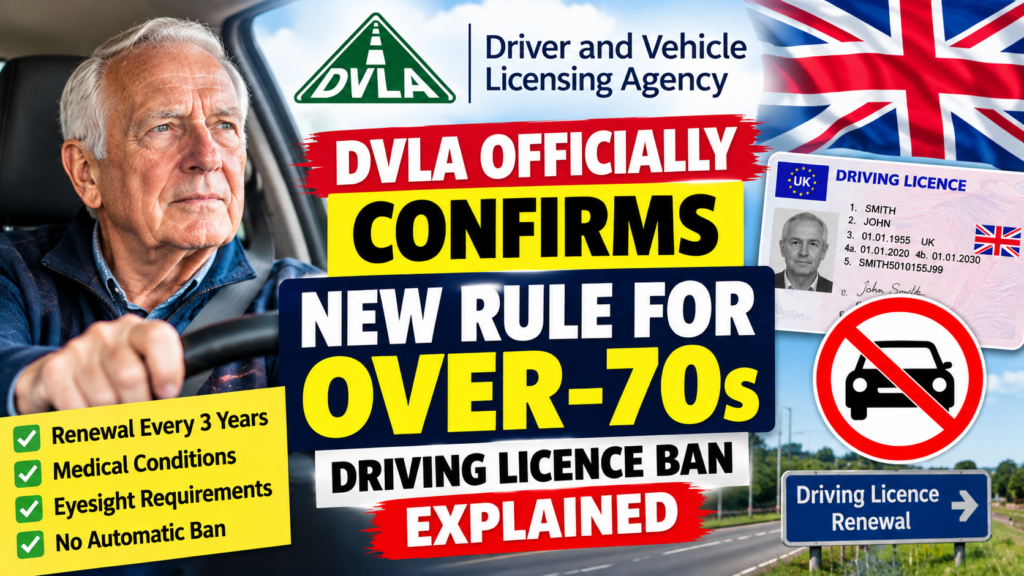
A new driving licence update for drivers aged 70 and over is attracting attention across the UK, with many older motorists concerned about whether they could lose their licence. The key point is that reaching the age of 70 does not automatically result in a driving ban. Drivers can generally continue driving after 70, but they must renew their licence and meet the relevant medical and legal requirements. Anyone approaching their 70th birthday should check their renewal date and make sure the information submitted to the DVLA is accurate.
What Happens to Your Driving Licence at 70?
When a driver reaches 70, the ordinary driving licence arrangements change. A licence normally needs to be renewed at age 70 and then every three years. The renewal process includes confirming that the driver still meets the required health and eyesight standards. This does not mean that every person over 70 has to stop driving. Instead, the system requires older drivers to renew their entitlement and declare relevant medical conditions where applicable.
Is There an Automatic Driving Ban for Over-70s?
No, turning 70 does not automatically mean that a person is banned from driving. There is no general rule under which every driver loses their licence simply because they reach this age. Drivers over 70 can continue to drive if they meet the applicable requirements and successfully renew their licence. However, certain medical conditions or other circumstances can affect an individual’s entitlement to drive, which is why accurate declarations are important.
How Often Must Over-70s Renew Their Driving Licence?
Once a driver reaches 70, the driving licence generally needs to be renewed every three years. Drivers should not wait until they have stopped driving before checking their licence status. The renewal can normally be completed through the official DVLA service, and drivers should use GOV.UK rather than unofficial websites that may charge unnecessary fees or collect personal information.
What Medical Conditions Must Be Declared?
Older drivers may need to tell the DVLA about certain medical conditions that could affect their ability to drive safely. The requirements depend on the specific condition, its severity and the type of licence held. Conditions affecting eyesight, neurological function, heart health, diabetes and other areas can have specific reporting requirements. Drivers should check the official DVLA medical guidance rather than assuming that age alone determines whether a condition must be reported.
Does Poor Eyesight Affect a Driving Licence?
Eyesight is an important part of driving safety, particularly for older motorists. Drivers must be able to meet the required vision standards, including being able to read a number plate at the required distance and meeting the applicable visual requirements. If a driver’s eyesight changes, they should have it checked by an appropriately qualified professional. Wearing prescribed glasses or contact lenses may allow a driver to meet the required standard, but individual circumstances can vary.
What If a Driver Has a Medical Condition?
Having a medical condition does not automatically mean that a driver will lose their licence. The DVLA considers the relevant medical information and may request further evidence or a medical assessment where necessary. Depending on the circumstances, a driver may be allowed to continue driving, may receive a licence with specific conditions, or may have their entitlement restricted or withdrawn. The decision depends on the medical and licensing requirements that apply to the individual.
Can the DVLA Stop an Over-70 Driver From Driving?
The DVLA can take licensing action where a driver does not meet the required medical or legal standards. However, this is different from an automatic ban based solely on age. If medical information indicates that driving may no longer be safe, the DVLA can review the driver’s entitlement and take the appropriate licensing action. Drivers who receive a formal DVLA notice should read it carefully and follow the instructions provided.
What Should Over-70 Drivers Check Before Renewal?
Before renewing, older drivers should check their current driving licence details, eyesight and any medical conditions that may need to be declared. They should also make sure their address and other personal information are correct. Using the official GOV.UK DVLA renewal service is the safest option. Drivers should be particularly cautious about websites that look official but charge additional fees for a standard government service.
How Can You Renew a Driving Licence After 70?
Drivers can normally renew their driving licence through the official government service when they become eligible. The renewal process requires the driver to provide the requested personal information and confirm the relevant declarations. In some circumstances, additional medical information may be required. Drivers should follow the instructions provided by DVLA and submit accurate information rather than relying on social-media posts about new age restrictions.
Could New Rules Affect Older Drivers?
Driving regulations can change over time, and some changes may introduce new requirements for particular drivers or medical conditions. However, an online headline claiming that all over-70s face a new driving ban should not be accepted without checking the official source. The exact rule depends on the legislation and licensing requirements in force. Older drivers should therefore check the latest DVLA guidance on GOV.UK before making decisions about whether they can continue driving.
What Happens If You Do Not Renew Your Licence?
If your licence has expired and you have not completed the required renewal, you should not assume that you can continue driving normally. Drivers should check their licence status and complete the renewal process as soon as possible. Continuing to drive without the appropriate entitlement can create legal and insurance problems. It is therefore important for drivers approaching 70 to keep track of their renewal date.
Beware of Fake DVLA Messages
Older drivers should also be alert to scams involving fake DVLA messages. Fraudsters may send emails or text messages claiming that a driving licence is about to be cancelled and asking the recipient to provide personal or payment details. Some messages contain links to websites designed to look like government services. Do not click suspicious links or provide banking information in response to an unexpected message. Instead, access DVLA services directly through GOV.UK.
Important Update for UK Drivers Over 70
The main point for drivers aged 70 and above is that there is no automatic driving ban simply because of age. The licence renewal system requires older drivers to renew their entitlement periodically and meet the relevant medical, eyesight and legal requirements. A driver’s individual circumstances can affect their entitlement, so anyone who receives a medical or licensing notice from DVLA should follow the official instructions carefully.
Final Words
The DVLA driving licence rules for over-70s are designed to ensure that drivers remain medically and legally fit to drive while allowing older motorists who meet the requirements to continue driving. Reaching 70 does not automatically end a person’s driving entitlement. Drivers should renew their licence every three years after 70, declare relevant medical conditions and make sure they meet the required eyesight standards. For the latest information, always check the official GOV.UK DVLA guidance rather than relying on viral claims about an automatic driving ban.