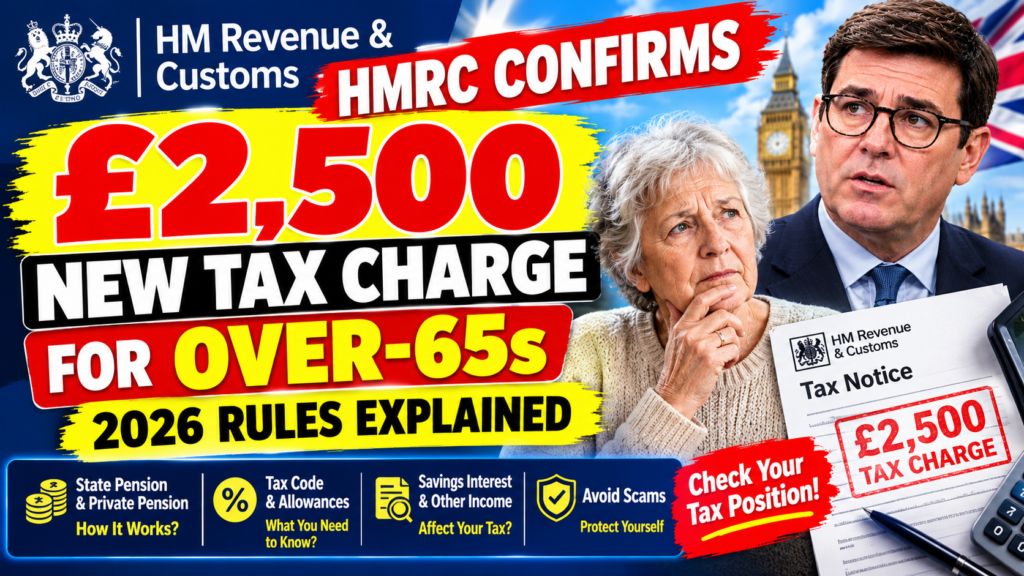
A claim about a £2,500 new HMRC tax charge for people over 65 has attracted considerable attention among UK pensioners in 2026. Many older people are now wondering whether they will have to pay an additional amount to HM Revenue and Customs. However, pensioners should be careful before assuming that everyone aged over 65 will automatically receive a £2,500 tax bill. UK Income Tax is generally based on a person’s taxable income and individual circumstances, including State Pension, private pension income, employment income and savings interest.
Is There Really a £2,500 Tax Charge for Over-65s?
There is no general rule that every person over 65 automatically has to pay a £2,500 HMRC charge simply because they have reached that age. A £2,500 amount could represent an individual’s tax liability in particular circumstances, but it should not be treated as a universal charge for all older people. Pensioners should check their own tax code, taxable income, pension payments and HMRC records to understand whether they actually owe additional tax.
Why Are Pensioners Talking About £2,500?
The £2,500 figure may be connected to calculations involving pension income, savings interest or other taxable income received during a tax year. When a person’s total taxable income increases, their overall tax liability can also increase depending on the applicable tax rules. However, the exact amount varies from one person to another. Two pensioners of the same age can have completely different tax bills because their income sources, pension amounts, savings and other financial circumstances are different.
Does Turning 65 Automatically Increase Your Tax?
Reaching the age of 65 does not automatically create a new £2,500 tax bill. The UK tax system does not simply apply a fixed additional charge because someone reaches a particular age. Instead, the amount of tax a person pays is generally connected to their taxable income and the allowances and tax rates that apply to them. Pensioners should therefore avoid making financial decisions based only on headlines suggesting that everyone over 65 must suddenly pay an extra amount.
How Is State Pension Taxed?
The State Pension is taxable income, although Income Tax is not normally deducted directly from the State Pension payment itself. If a pensioner has enough taxable income to owe tax, HMRC may collect the tax through another source, such as a private pension or employment income. This can sometimes result in a change to a person’s tax code or a different amount being deducted from another pension payment, which can make the change appear confusing.
What About Private Pension Income?
Private and workplace pension income can also be taxable depending on the person’s total income and circumstances. When a pensioner receives a private pension alongside their State Pension, HMRC may use a tax code to collect the appropriate amount of tax from the private pension. The amount deducted depends on the individual’s total taxable income and applicable allowances. Anyone receiving more than one pension should therefore make sure HMRC has accurate information about all relevant income sources.
Can Savings Interest Increase a Pensioner’s Tax Bill?
Yes, savings interest can affect a pensioner’s taxable income. Depending on their circumstances, a person may have a Personal Savings Allowance that allows some interest to be received without additional Income Tax. However, interest above the applicable allowance can become taxable. This means pensioners who keep substantial amounts in savings accounts may need to consider the interest they receive when reviewing their overall tax position and checking whether their tax code is correct.
Does HMRC Have a Special £2,500 Charge for Over-65s?
Pensioners should be particularly careful with the wording of this claim. A fixed £2,500 special charge for everyone over 65 should not be assumed unless there is an official HMRC announcement specifically establishing such a requirement. Tax liabilities are normally calculated according to taxable income and the relevant tax rules. If an individual receives an HMRC calculation showing that they owe £2,500, that amount should be checked against their actual income, allowances, tax code and previous payments.
What Should Pensioners Check in 2026?
Pensioners should review their HMRC tax code, State Pension, private pension income and savings interest when checking their tax position in 2026. It is also important to make sure HMRC has the correct information about any changes in income. A change in pension income or savings interest can affect the calculation used by HMRC. Checking your official tax information regularly can help identify an incorrect tax code, unexpected deduction or calculation that needs further clarification.
Could a Tax Code Change Cause Higher Deductions?
Yes, a change in tax code can affect the amount deducted from a person’s pension or employment income. HMRC may change a tax code when it receives updated information about income, benefits or other relevant circumstances. If the tax code changes, the amount deducted from a private pension can also change. Pensioners who notice a sudden reduction in their regular payment should check their tax code notice and compare the figures with their current pension and other taxable income.
What Is the Personal Allowance in 2026?
The Personal Allowance is an important part of the UK Income Tax system because it determines how much income an eligible person can generally receive before paying Income Tax at the basic rate. Pensioners should understand that the Personal Allowance is not an additional £2,500 payment or charge specifically connected to turning 65. The amount of tax-free income available depends on the applicable rules and the individual’s circumstances. Higher total income can also affect the allowances available in certain situations.
What About the Old Age-Related Personal Allowance?
Some older taxpayers may remember the previous system of age-related Personal Allowances, which provided different allowances for certain older people. These arrangements changed, and people should not assume that reaching 65 automatically provides a larger tax-free allowance under the current system. Modern tax calculations depend on the rules currently in force and the individual’s income. Pensioners should therefore check current HMRC guidance rather than relying on older information about age-related tax allowances.
How Can Pensioners Check Their HMRC Tax Position?
The safest way to check your tax position is to use the official GOV.UK website and HMRC’s online services. Depending on your circumstances, you may be able to check your tax code, estimated income and other tax information online. Pensioners should compare the information held by HMRC with their actual pension payments, savings interest and other taxable income. If something appears incorrect, it is better to contact HMRC through an official service rather than relying on information shared through social media.
Beware of £2,500 HMRC Tax Scams
Pensioners should also remain alert to scams using claims about a new £2,500 HMRC tax charge. Fraudulent emails, text messages and phone calls may claim that an older person must immediately pay money to HMRC or provide personal banking information. Some scams use government-style logos and urgent language to appear genuine. Never provide your banking password, PIN, card security information or one-time security code to an unexpected caller or message sender. Always verify the information independently through GOV.UK.
What If HMRC Says You Owe £2,500?
If your official HMRC account or correspondence says that you owe £2,500, do not immediately assume that it is a new age-related charge. Check the tax year, income figures, tax code and calculation shown by HMRC. Compare the information with your pension statements and other taxable income. If you believe the calculation is incorrect, contact HMRC through the official GOV.UK contact service and ask for clarification. Keeping copies of pension statements, tax notices and income records can also make it easier to resolve any disagreement.
Could Pensioners Have Different Tax Bills?
Yes, pensioners can have significantly different tax liabilities even when they are the same age. One person may receive only a State Pension, while another may have a State Pension, workplace pension, private pension, savings interest and part-time employment income. Because taxable income can differ considerably, the amount of tax owed can also be different. This is why a fixed figure such as £2,500 should not be assumed to apply to every over-65 without checking the individual’s circumstances.
Important Update for Over-65s
The most important message for UK pensioners is that being over 65 does not by itself create an automatic £2,500 tax bill. Your tax position depends on your taxable income and the rules that apply to your circumstances. State Pension, private pensions, employment income and savings interest can all be relevant when HMRC calculates your tax position. Pensioners should therefore check their own official records instead of assuming that a viral headline represents a universal rule.
Final Words
The £2,500 HMRC tax charge for over-65s claim has attracted attention, but pensioners should carefully verify the details before assuming that a new universal charge has been introduced in 2026. There is no basis for treating £2,500 as an automatic payment required from every person over 65 simply because of their age. The safest approach is to check your HMRC tax code, pension income and taxable savings interest through GOV.UK. If HMRC shows that you owe money, review the calculation carefully and contact the official HMRC service if you believe anything is incorrect.