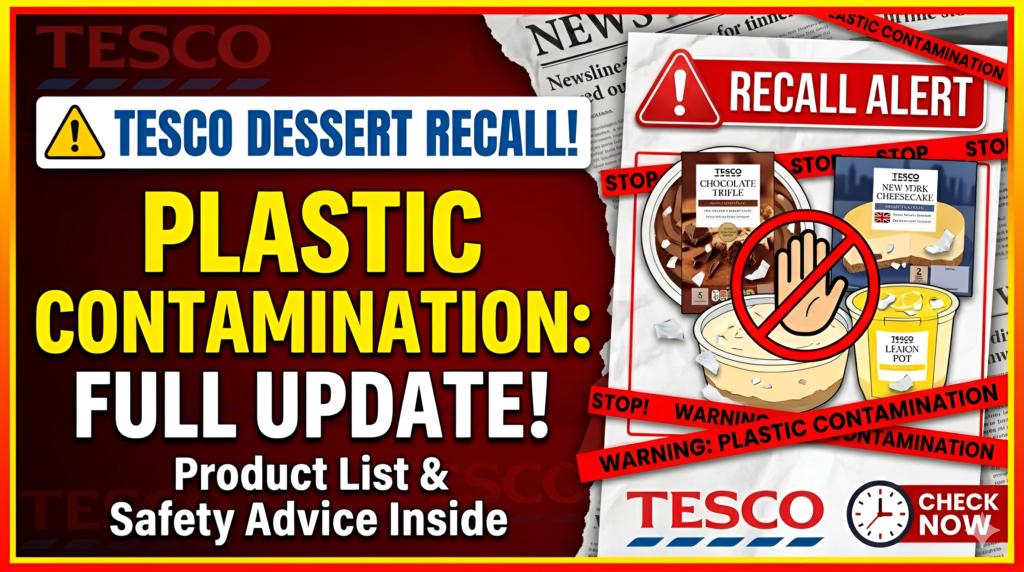
The Tesco plastic contamination dessert recall has become a major concern for shoppers across the UK, especially those who regularly purchase ready-made desserts and chilled sweet products. Food safety alerts like this quickly gain attention because they directly affect consumer health and daily grocery choices. Tesco has issued a precautionary recall after reports that certain dessert items may contain small pieces of plastic, which could pose a choking hazard or cause injury if consumed. Customers are now being advised to check their purchases carefully, avoid consuming affected products, and follow official safety guidance.
What Is the Tesco Plastic Contamination Dessert Recall?
The Tesco dessert recall due to plastic contamination refers to a safety action taken after identifying the possible presence of foreign material (plastic fragments) in selected dessert products. This type of contamination can happen during manufacturing or packaging processes, and even small particles can pose serious risks if swallowed. As a result, Tesco has acted quickly to remove the affected items from shelves and inform customers. The recall is being treated as a precautionary measure to protect public health, which is a standard procedure in the food industry when contamination risks are detected.
Full List of Affected Tesco Dessert Products
While the exact list may vary depending on batches and regions, Tesco typically publishes a specific list of affected dessert products, including product names, pack sizes, batch codes, and best-before dates. These details are essential because not all items in a product range are always affected. Customers are advised to check the official Tesco recall notice or Food Standards Agency (FSA) alerts for the most accurate and updated list. Commonly recalled items in such cases may include chocolate desserts, mousse cups, layered puddings, trifles, or chilled sweet treats, depending on the production batch involved.
Why Plastic Contamination in Food Is Dangerous
The presence of plastic in food products is considered a serious safety issue because it can lead to choking, cuts inside the mouth or throat, or internal injury if swallowed. Unlike some minor food defects, foreign objects like plastic cannot be safely consumed under any circumstance. This is why even a small risk leads to immediate recalls. Food safety authorities treat such incidents with high priority to ensure that consumers are protected and that potentially harmful products are removed from circulation as quickly as possible.
What Should Customers Do If They Bought These Products?
If you have purchased any dessert that may be part of the Tesco plastic contamination recall, you should not eat the product under any circumstances. Instead, check the packaging for product name, batch code, and expiry date to confirm whether it matches the recall notice. Tesco usually advises customers to return the product to the nearest store for a full refund, even without a receipt. This process is designed to be simple and customer-friendly so that affected items can be removed from households quickly.
Tesco’s Official Response and Safety Measures
Tesco typically responds to such situations by issuing clear public warnings, removing affected products from stores, and working with suppliers to identify the source of contamination. The company may also conduct internal investigations and strengthen quality control processes to prevent similar incidents in the future. These actions are part of Tesco’s food safety responsibility and regulatory compliance, ensuring that customer trust is maintained while addressing the issue transparently.
Role of the Food Standards Agency (FSA)
In the UK, the Food Standards Agency (FSA) plays a key role in monitoring food safety incidents and issuing public alerts. When a product recall involves potential health risks like plastic contamination, the FSA publishes detailed information including product descriptions, affected batches, and safety instructions. Consumers are encouraged to follow FSA updates because they provide the most accurate and verified information regarding food recalls across the country.
How to Check If Your Product Is Affected
To verify whether your dessert is part of the Tesco recall, you should carefully check:
- Product name and brand
- Pack size and packaging type
- Batch code or lot number
- Best-before or expiry date
These details are usually printed on the packaging and must match the official recall notice. If you are unsure, it is safer to avoid consuming the product and contact Tesco customer service for clarification.
Are All Tesco Desserts Affected?
No, it is important to understand that not all Tesco desserts are affected by this recall. Typically, only specific batches from certain suppliers are included in the safety alert. This means customers can continue to purchase other Tesco dessert products that are not listed in the recall notice. However, shoppers should remain cautious and always check official updates when a recall is announced.
How Food Recalls Protect Consumers
Food recalls like the Tesco plastic contamination dessert recall are part of a wider system designed to protect public health and maintain food safety standards. While recalls may cause temporary inconvenience, they are a sign that companies and regulators are actively monitoring risks and taking corrective action. Quick recalls help prevent potential injuries and ensure that unsafe products are removed before causing widespread harm.
Important Safety Advice for Consumers
Consumers should always stay alert to food safety alerts, product recalls, and official announcements, especially when it comes to packaged or ready-to-eat items. If a product looks unusual, damaged, or contains foreign material, it should not be consumed. It is also advisable to follow updates from trusted sources like Tesco, the FSA, and official government websites rather than relying on unverified social media posts.
Conclusion
The Tesco plastic contamination dessert recall highlights the importance of food safety awareness and quick action when potential risks are identified. Customers are strongly advised to check their purchases, avoid consuming affected items, and return them for a refund if necessary. While not all products are impacted, staying informed and cautious can help prevent health risks. Tesco and food safety authorities continue to monitor the situation closely to ensure that consumer safety remains the top priority.